Peter Lovesey was one of a select band of crime writers who score highly with both crime fans and fellow peers. One of his admirers was the late Prime Minister, Margaret Thatcher who was intrigued by the elegant television adaptation of the Sergeant Cribb books; to among many other writers such as Colin Dexter, Jonathan Gash and Reginald Hill, whom also had novels translated to the TV screen. Peter Lovesey passed on in April 2025.
I was introduced to the Cribb historical novel Waxwork by a good literary friend cc 1990. Although he was not a crime buff the novel had merits for him beyond any label or genre. It has character, suspense, a sense of unease – even terror. Here was a writer of class telling both a story that left you wanting more, as well stimulating the brain cells. When I started Scorpion Press Peter was one of the first authors I approached. We published The Last Detective, which was the first Peter Diamond, modern-day novel launched to the booktrade in the basement of St Martin in the Fields, London jointly with Postmortem by Patricia Cornwell.
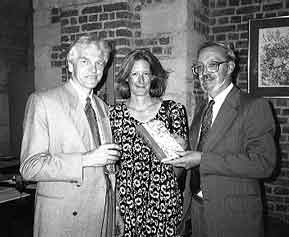
Then I recall attending a garden party for crime writers hosted by Peter and Jax, his wife, whom Peter insists got him into crime. By this time the Diamond series was well underway and the marvelous stand-alone The False Inspector Dew had given Peter a truly international reputation. Other writers wanted to be in his company. For instance, Margaret Yorke travelled down from the Home Counties.
Not only did Peter know plenty of his peers socially, he was a very perceptive at appraising the work especially of historical writers such as Lindsey Davis and George MacDonald Fraser. He showed that he knew his English Lit describing “the blue remembered hills” (referring to Reginald Hill); again in another marvelous author Appreciation for inclusion in the Scorpion Press editions. This skill reminded me of other detective writers with critical faculties, whom we both knew, the senior statesmen of the genre, such as Julian Symons and Harry Keating.
Peter could be relied upon to regularly produce a new Peter Diamond book up until last year. He had written some 22 volumes to keep his readers happy. Then he had announced his retirement following a terminal diagnosis. He had been an author since 1970 – pretty much a whole working life. During the last seven years Peter agreed for me to rebind two of my favourite books in leather in a run of 12 copies; the actor Alan Dobbie also signed Waxwork, and the other was the Gold Dagger awarded The False Inspector Dew; all first editions from 1978 and 1982 respectively. It was a honour to know and work with Peter.
]]>Richardson’s early books obviously paid homage to Christie, Sayers and others such as Chesterton. He was admired by those in the business for his pacing and ability to be humorous and convincing. Advised by his editor that times were changing he began to experiment, moving toward the psychological side of crime fiction. But although novels such as Significant Others received good notices Robert found stand alone novels lacked sparkle. Victims (1997) was his last book.
Robert preferred to become an exponent of the merits and attractions of crime fiction. He was asked to be chairperson of the Crime Writer’s Association on two occasions. His convivial personality and knowledge of the genre, not forgetting his contacts from the media world enhanced the status of crime writers. He much admired the early Scorpion Press titles with authors such as Ruth Rendell, Jonathan Gash, Colin Dexter, Peter Lovesey and Len Deighton. The very first Scorpion production was a Gus Maltravers mystery, Sleeping in the Blood. A special edition, bound in leather with marbled sides, of 75 copies with an appreciation by Robert Barnard. It received a sparkling review in London’s local paper The Hampstead and Highgate Gazette. Robert was pleased as punch!
In his later year. s he resumed editorial roles for papers such as The Observer. He had a sharp eye for detail and was well-liked. He passed in 2021.
]]>In Centuries past libraries in great houses were lined with leather bound volumes. They provided accessibility to knowledge, exuded learning and gave satisfaction to the owner – who had given time and effort in assembling his or her collection. The subject matter was often legal texts and histories – explaining inheritance of land and titles; and perhaps changes to the estate, the buildings and gardens. The books were important to the owners as they signified who they were. As time went on the books would need restoration and in due course rebinding. These treasures must be carefully preserved.
By the time of the 20th Century with its great social change and the vast increase in literacy the population read magazines, newspapers and books as never before. Many of the youngsters were introduced to children’s literature; later to comic stories of adventure, even science fiction and macabre tales of horror. Publishers fed a ready market with uniform or cheap editions as the original hard cover would have been expensive. Avid readers sought out the best writers – those who had a reputation, whether in mainstream (an increasingly elastic term) or genre fiction. And with affluence a market for the best books grew. Some collected the writers they have loved over the years. A nice first edition of a highlight was the thing – if it was signed by the author even better.
One of the problems about collecting first editions of the highlights of 20th Century literature is that hardly any copies surface; fine copies in a reasonable jacket of say Graham Greene’s Brighton Rock will cost a fortune. Even with no jacket one will have to pay perhaps ten times the cost of a new hardback. Even tidy copies are hard to find, and no one wants a first that has seen better days. So in practice many books cannot be found. This is why a few select booksellers began to rebind first editions to give them a new lease of life. The cost of rebinding by skilled craft binders selecting the materials and doing some restoration means that only the most desirable books are rebound.
In 2018 Scorpion Press started undertaking rebindings of mystery books. Typically, the books selected were the first novel or early in an author’s career when the print run would have been fairly low. Authors such as Lindsey Davis, Peter Lovesey, Tana French and Minette Walters. Each book was produced in a run of twelve lettered copies signed by the author with a new introduction. The books have gilt titles and raised bands and scorpion logo to the spine; unlike other leather rebindings, the Scorpion Press has continued with its trademark of marbled papers sides. These are specially made and colour co-ordinated.
In 2020 Scorpion Press expanded the area of interest to books that had been adapted to the big screen. The introduction gave consideration not only to the distinctive merits of the book but the film as well. This was reinforced with a film still. The collectable value or pull to the collector was increased still further with the inclusion of the autograph of the film star. Michael Caine agreed to sign Len Deighton’s Funeral in Berlin (1964) and Jack Higgins war classic The Eagle has Landed (1975). If one is a fan of Deighton or Higgins this is simply a “must have”. Why? First editions on the open market for landmark books signed by the author and star are priced at astronomic levels because they have a following of people who can afford to pay for that rare thing. Naturally, after nearly fifty or sixty years since these books were issued and the authors long retired, it is indeed a rarity.
]]>Scorpion Press issued a leather rebinding of The Distant Echo 1st edition in a run of only 12 copies signed by the author with a new introduction. Contact us if you would like the last copy.
]]>
 Reginald Hill, prolific British author best known for his 24 idiosyncratic, but highly elegant crime novels featuring the Yorkshire police detectives Andrew Dalziel and Peter Pascoe, is perhaps one of the most admired and influential crime writers of the last 50 years. The BBC adapted many of the books shown on British television between 1996 and 2007. The series with the avuncular Warren Clarke as Dalziel and the reserved Colin Buchanan as Pascoe has been an enduring hit. It was shown in the USA on PBS.
Oxford educated Reginald Hill taught in a further education college in Leeds and felt close to his Northern roots, living as a full-time writer near the Lake District. He could be viewed as an early exponent of the “regional mystery” – able to bring together a genuine sympathetic ear for life in Northern towns with story lines about social change, and with a feel for the loss of identity as well as a sympathy for the emerging currents of feminism and sexuality.
The first novel in the series, A Clubbable Woman, published in 1970, established the prickly relationship between the blunt and earthy Superintendent Dalziel and his urbane and erudite young colleague, Sergeant Pascoe, who has had to live down his reputation as “a jumped-up, supercilious, intellectual twit.” Here the Superintendent is in his element mixing with the rugby fraternity, both male and female, while the aloof Pascoe looks on.
Incompatible by class, education and temperament, the partners have bickered over everything from the strident politics of Pascoe’s feminist wife to the interpretation of an Emily Dickinson poem found at a crime scene.
Mr. Hill made a formidable team of this ill-matched pair by balancing Pascoe’s reflective intelligence with Dalziel’s blunt pragmatism. Crude, rude “Fat Andy” is the Falstaff life force in these novels, while Pascoe is Prince Hal.
The later books are not primarily “Whodunits”, although the reader will be satisfied with the richness of the author’s guile with plots twists. After charting in Underworld (1988) the miner’s strike and its devastating affect on communities, Reginald Hill turned to rural life, environmental issues, and the encroachment of avaricious values. For him happiness was to be lost or found in such surroundings. This harked back to the Lake poets – and Hill took it to another level. Despite the horror of deaths at the start of Pictures of Perfection (1994), Sergeant Wield delves into another kind of perfection. While Dalziel and Pascoe keep well out of the picture.
Another depiction of paradise is found in On Beulah Height (1998). In a hot summer the bodies of several girls emerge as the water recedes in a reservoir. The investigation brings all kinds of past misdeeds to the surface. In this novel Peter Pascoe, now a more mature policeman confronts the possibility of losing his own daughters. A book ripe with emotive power.
Peter Lovesey, author of the Sergeant Cribb and detective Diamond mysteries began writing at the same time as Reginald Hill. They knew each other well. Lovesey penned a marvellous appreciation of Hill for the Scorpion edition of Recalled to Life (1992). He recalls with reference to A E Houseman, “the blue remembered hills” or Hills. His admirers also included the present and previous President of the Detection Club – Martin Edwards and Julian Symons; the popular Canadian mystery writer, Louise Penny; and American writers such as the late Walter Satterthwait. His influence is to be found in today’s popular writers such as Stephen Booth and Ann Cleeves. ]]>
As a young man George Blake led a life full of courage and dedication, yet he had a complicated background. Brought up as George Behar in Holland, his father Albert was born in Constantinople, studied at the Sorbonne and joined the French Foreign Legion and later transferred to the British Army, fighting in Mesopotamia. He concealed his Jewish background from his wife’s family because of anti-Semitism. He was married in London and christened the son after the King of England! He died in 1934 and wished for George to be looked after by his wealthy sister in Cairo. In Egypt young George came under the wing of his left-wing cousin Henri, but in his autobiography he made it clear that he rejected political activity because of his austere Calvinist upbringing, but also that the political discussions later had “acted as time-bomb, and the results under the affect of events shaped my further views”.
In 1938 George was back in Holland as a school boarder where he experienced first hand the bombing of Rotterdam. When the Nazis attacked the Gestapo arrested him but he had the resolve to escape and join the Dutch resistance. He managed to make his way to England in 1943 and as a British subject awaited the call up that frustratingly never seemed to come quick enough. However, he had the good fortune to meet with a naval commander who was also an intelligence officer known to him from his work with the resistance; the officer recommended he join the Royal Navy but he was medically unsuited to submarine duties. His gift for languages was initially overlooked; but when at last his talent was recognized, and having changed his name to Blake, he was commissioned and worked with the Dutch section, where he trained agents to be dropped into Holland and he decoded intelligence material that came back. While his superior was away he ran the section. In 1944 was promoted again to the staff at Supreme HQ in regard to the Normandy landings, and was a leading member of the Dutch team during Operation Market Garden. All this work involved intelligence and processing it to arrive at an understanding of how the enemy thought. After the war Blake was assigned to be CO of the naval intelligence at Hamburg, which was cover for recruiting agents that crossed over to the East. He both trained operatives and assessed the information that they gathered from the other side.
Because of his outstanding war record he was recommended to join SIS and become a specialist by studying Russian at Cambridge University. The decision to stay on in service to his country was mainly to do with his upbringing. His personality was torn between his the strict religious beliefs set out by his father who wanted him to become a priest and his cousin and relatives who had anti-imperial national liberation beliefs. Apart from his mother he had no family in Britain. Not surprisingly, he craved the craved the discipline and sense of duty that being a service career provided. During his studies of Russian language, history and literature he found a passion Russia – a country that had been beset with set-backs and reverses such as the invasions launched by the West under Napoleon, the Whites and Hitler. It is interesting that while reading political texts in the original language he also attended Russian Orthodox services. He was fully immersed in Russian national perspectives, and later Blake candidly admitted that it was at this juncture that he would at some point assist the Soviet Union.
After completing his studies Blake was posted to Seoul, the capital of Korea. His task was to form a cross-border spy network. Given the geography and logistics this was an unlikely prospect. Perhaps the Foreign Office knew it was a potential hot spot and wanted to test him. It was not long before war broke out he and the others were captured and held in an internment camp. No orders were ever received to evacuate. When the Chinese entered the war Blake, Captain Holt and the other captives were forced to march through hazardous mountains. The so-called “death marches” inevitability took its toll. During this time he again showed outstanding capabilities. All accounts praise Blake for his leadership and inspiration. He negotiated with the Russians and had many prisoners evacuated on humanitarian grounds. His compassion for others was recorded by the survivors, and his bravery and cleverness was shown when he escaped the POW camp; but unfortunately he was recaptured and facing death by a firing squad on a charge of spying he called out in Russian he was not a spy, but had diplomatic immunity! They did not fire.
Back in London Blake was hailed as a hero and nearly made it onto the honors list. He was reluctant to settle, and the potential in-laws prevent a marriage because of his Jewish background. However, it was more or a condition that he found a partner, and he found one at the SIS offices at Queen Anne’s Gate, where he met and later married Gillian Allan. Her father was a serving member of SIS too. However, Blake has since admitted that he agonized over whether it was right to marry someone who he could not share his secret leanings. Several times he wanted to tell her what he really felt, especially at the end of his career, but he could not.
At the beginning of 1955 Blake was posted to Berlin, the largest and most important overseas posting of the SIS. His task was to find and “turn” East German agents.
Collectively, the service seems to have in toto confidence in Blake’s character and ability. They may have selected him as the chief Berlin espionage agent who was to find out what the Russians really knew as a double agent. This is born out by former SIS operatives and the espionage writers Cookridge, Deacon, Knightley, Montgomery Hyde, Porter, Rusbridger, and Wright. The theory that SIS selected Blake as a double, making it his duty to give away secrets in a bargain or swap for the other side’s secrets has become orthodoxy over the years. Officially, it is vehemently denied and it has no factual published support. Indeed, if it were true why has no evidence been uncovered in the KGB archives. Historian Andrew and the defector Oleg Gordievsky (who write together) researched the archives and were unable to find anything that supports the British double theory. Perhaps he had a KGB code name that could not be traced. Blake himself denied he was a double double. He had decided to work for Moscow in 1951 and became active in 1953.
One of Blake’s first large-scale secrets passed to Moscow Centre was details the joint GB/US project Operation Gold. He was committee secretary and therefore well placed to know the details. Gold was an attempt to garner secrets by listening to the Russians on the other side from devices placed in an underground tunnel (somewhat reminiscent of tunneling during the First World War). When the Russians “discovered” the tunnel in 1956 SIS/MI6 held an inquiry into the leak. No culprit was found. With hindsight it seems that Gold was probably a diversion instigated by Blake meant to keep the Allies busy with false information. Blake had told the Soviets about the plans even before it was built. Yet Blake remained undiscovered despite it being rather obvious that someone had told the enemy. It would seem that the joint Allied sponsors wanted to believe it was successful because they had an enormous amount of Intel to access and quantify. Apparently, they never discovered the counter-intelligence plot until Blake confessed! It was particularly galling for the policymakers, shattered the ambitions of technical ops and was a heavy financial burden for the American government, not to mention Anglo-American intelligence co-operation.
Between 1955 and 1959 numerous agents were “swapped” or “apprehended”; what is unclear is what exactly is George Blakes’s responsibility is in this web of deceit and double bluff. In 1959 knowing that he was in danger he returned to England, and was then sent out of bounds to the spy school at Beirut. Toward the end of the following year Blake was called back to London for an “interview”. A high-ranking Polish defector had given evidence of Blake’s betrayal to the Americans. Confirmation of Blake’s involvement in a compiling a list of potential recruits as possible double agents for the KGB came following the arrest of Blake’s deputy Horst Eitner in September 1960. This time the top echelons could not over look it. Blake had been warned by Kim Philby not to return to Britain as he was certainly would have been arrested for treason. Blake was very troubled as to how to respond. He decided he was see it through and was arrested by Special Branch after a brief meeting with his chief, Sir Dick White.
Accounts of what happened next are often carefully edited to gloss over the pertinent points of motive and what a predicament the Foreign Office was in. Costello gives an edited account, but Blake himself and those that actually knew him confirm that the process of inquisition took place at a country house, where he was questioned for several days. This was confirmed by CIA leaks over the years. During the interviews over four days he does not held in custody and was allowed to stay with his mother in Radlett, Hertfordshire each evening. He was calm and the questions were politely put. He admitted to no offenses. One of the complications was as a senior intelligence officer he had latitude to exchange information, including the names of low ranking contacts. Only by taking a long view could it be proposed that secrets had needlessly or wrongly been passed. Few people would have had the whole picture. So, in the end it was all about doubt and trust. Then when the process was over, and they could not reasonably find any offenses backed by tangible evidence, he was told that they knew he had spied for the Russians and painted a scenario along the lines that he was tortured and made to confess in Korea; therefore after they “blackmailed” him to aid the Soviets. Blake dismissed this and scornfully admitted that had worked for the betterment of mankind by helping the Russians.
His inquisitors must have had a great deal of difficulty in understanding what Blake’s motivation was. For he believed that Britain and the United States had become morally corrupt at the political centre; he helped the Russians to redress the balance in world affairs. Historians differ when the Cold War started, for Blake it was Churchill’s bellicose Fulton speech in 1947, a few years’ later he witnessed the bombing of North Korea, something on an unimaginable scale; this had made him consider that the United States, under the guise of the United Nations, was destroying any prospect of peace. One can speculate on what else he said, he would no doubt have rallied against the use of MI6, along side the CIA, in covert military interventions in the Gulf, and the garrisoning of British troops to protect wealthy autocratic rulers. Middle Eastern regimes that were not compliant to Allied policy were to be removed by fair means or foul. Although a Jew, like his cousin Henri, Blake empathized with the Arabs, and could well have privately been in less accord with Soviet machinations in the region. He would have known too, that the body politic in Britain was itself divided. The liberal wing of the Foreign Office favoured recognition of the Arab cause, the PLO; this position was opposed by the hawks in SIS who promoted military adventures with little understanding of the Arab world.
The next day he was taken to a Hampshire country house for a conference lasting several days, while his superiors considered what to do. Such a scene of introspection, moralising and the weighing of political and moral dilemmas, all has echoes in the work of modern espionage writers. Blake himself was under the impression that the option of quietly disposing of him was considered. We only have Blake’s word for this. But why was he taken to the country house for further talks and strolls around the grounds, with Special Branch in tow, if the authorities had already made up their minds? It was all very messy, whichever way it was handled. The choices were three-fold: they could quietly dispose of the top agent, transfer him or have a trial. If MI6 opted for the latter they had to be sure Blake would not withdraw his confession. They had to get into the moral centre of the guilty party to know, as a matter of honour, he would not withdraw his confession at the last moment. This is why another SIS officer, whom Blake had known, actually shared the same bedroom. The second choice was to sideline Blake to somewhere where his talents would benefit Britain at least as much as the Soviet Union. It could be justifiably argued, that in learning Arabic for further service in the Gulf he was already going to fulfill this role. The problem with this, as already referred too, was that British policy was at best ambiguous, and Blake was himself responsible for too much embarrassing damage. So, if not the Middle East, perhaps somewhere such as Hong Kong station? The Sino-Soviet dispute was surfacing at this time. The second option must have been weighed carefully, because as Graham Greene said, “A spy allowed to continue his work without interference is far less dangerous than the spy that is caught. How right SIS was to defend Philby and how wrong MI5 was to force him out into the open. The West suffered more from his flight than from his espionage”.
The investigative work of Michael Randle and Peter Pottle provides solid evidence based on legal procedure that the charging of the defendant and his first committal hearing was held not before either Monday 10th or Tuesday 11th April, some seven or eight days after the 4th April when he was first interviewed by the secret service. This is based on reports in the Times that Blake was remanded on the 18th April and the 24th April for the third time; and also legal procedure that custody remands cannot be for more than eight days, and are usually less. Other circumstantial evidence of the date of Blake’s formal arrest was that his wife Gillian was not informed of this action until 12th April. George Blake was held on remand at Brixton prison for a month before his trial at the Old Bailey on 3rd May 1961. Randle & Pottle point out that in many respects the trial was illegal. It was a secret trial, held in camera, with no provable evidence; it involved a gross misapplying of the law against parliamentary statute regarding the sentence, and the appeal was undermined by a smear campaign. In their view, it was devoid of justice and that was why they were determined to assist in Blake’s escape.
Since George Blake had signed a confession and he knew that he would receive a prison sentence what is the problem? According to Blake, he friends in SIS were friendly and supportive until an important telephone call was received on the evening before he was handed over to Scotland Yard. Then the mood changed. Blake had been given to understand that one charge and only one charge was to be put under the Official Secrets Act. He denies that any plea-bargaining was ever discussed. One may or may not conclude from this point that his statement was full and frank – so much so that highly secret matters were divulged – and possibly, if Blake were a triple, names of talent spotters and protectors within the intelligence services. One name he might have given was Kim Philby, since one source names him as his talent spotter. This would have been around the time Philby was working with the Dutch section of SOE and before Blake became a full-time SIS intelligence officer. Instead of one charge, with a maximum penalty of fourteen years’ imprisonment, Blake was faced with five charges – all for the same crime – and the only evidence of guilt was his confession. For this, he received five maximum sentences of fourteen years, three running consecutively, and two concurrent, making a total of forty-two years’ imprisonment.
The authorities went to extensive lengths to suppress the true nature of the trial. However, it was reported more fully overseas, and this led to informed opinion in Britain taking note; parliamentary questions followed. Despite the fictional adventures of Ashenden and James Bond, no government had ever acknowledged the existence of the Secret Intelligence Service (until fairly recently). To do so, it was feared might inadvertently disclose too much about what it was for and how it was deployed. The Prime Minister, Mr Macmillan, although at pains to avoid mentioning the service, when asked directly was he an employee of the Foreign Office he did not deny it. He also made remarks that were malicious and prejudicial to Blake’s appeal. However, this was not all. To allay further criticism, a meeting of cross-party Privy Councillors was held in private, but one of the members present Mr George Brown met with Chapman Pincher on the very day the appeal got under way. Pincher has confirmed that the intention was clearly that an ‘inside story’ on Blake had been made available to the press. The next day, Fleet Street sizzled with the emblazoned headline: ’40 Agents Betrayed – all by this man’, coupled beside Blake’s photograph. The defendant’s council, Mr Hutchinson QC has confirmed that this claim was not in the deposition. It was a wicked smear and is tantamount to a deliberate subversion of the judicial system by use of a backhand leak concerning Blake’s sabotaging of this countries’ information gathering capability. This action effectively terminated the appeal.
In my opinion, the kernel of the Blake scandal was the political trial, which was really about revenge for the political sleight of Macmillan being outmaneuvered – not once, but several times by Blake’s actions. As Prime Minister, Macmillan and his Foreign Secretary Selwyn Lloyd, were kept waiting in Moscow for a week while General Secretary Khrushchev reportedly had “tooth-ache”. However, this comic episode concealed a split over nuclear diplomacy, which the Russians exploited. In Ted Allbeury’s Shadow of Shadows, Blake reported on the split to Moscow. In the late 50s and early 60s, Macmillan pursued an aggressive policy in the Middle East; as well as Egypt, Britain intervened in Iraq twice and in Oman. It is quite possible that when Macmillan heard that Blake had been responsible for the rolling up of SIS’s ambitious Egyptian network he was riled. Several sources also state that Blake divulged secret information about SIS’s two assassination attempts on Nasser – one before Suez – the other a blatant revenge attempt after. Perhaps without Blake’s intervention the Suez debacle might have been averted. All this made the Prime Minister demand his public humiliation. This point is further explained by the fact that as Eden’s chief adviser on foreign affairs, Macmillan pressed for military action against Nasser, even without any assurance of American support. However, when the mission produced a financial crisis, he quickly climbed down and called for an immediate cease-fire. Harold Wilson was quick to drolly quip that he was “first in, first out” of Suez. Thus, the Prime Minister was doubly vexed by Blake’s interference.
Blake spent nearly five years in Wormwood Scrubs prison, London. Several times he was due to be moved to one of the newly built high-security prison such as the Isle of Wight. This never happened. Why? He was content where he was. He was treated fairly, could learn Russian and dream of his new life in Russia. Through contacts in the prison he was aware that an escape was pending. The written records by Sean Bourke, The Springing of George Blake and The Blake Escape by Randle and Pottle are lengthy first hand accounts of the escape. The generally accepted view is that these amateurs set up and executed various aspects of the escape. Perhaps, but it is likely the big players had a role too. We know that Blake talked to KGB agents in prison. More significant is the MI5 role, perhaps, in the drama. Some sources suggest that Five kept a discrete watch on Blake when he was based in London. They may have reported all long to the wing of Six which had reservations about covert ops. As we previously pointed out the liberal wing of the Foreign Office was opposed to the Nasser assassination attempts, and Blake may well have been a channel to help to abort the plots. In short they owed him.
George Blake was taken to Moscow where he lived as an honored citizen for the rest of his life. His marriage to Gillian was dissolved while he was in prison and he remarried in Russia. He sacrificed friendship, honor and love for his cause – a cause that was basically, internationalist, peace seeking and anti-imperialist. But like all idealistic beliefs, the real world is not this perfect place, and messy compromises sometimes have to be made. George Blake’s views on Britain as a world power and society were shaped by his experiences during the war and its aftermath. He would have known from his friend and double agent Kim Philby that Britain was since 1940 bankrupt and financially dependent on the United States; and since the Americans had driven a hard bargain, Britain would henceforth assume the role not only of junior partner, but had lost its global power status. Early in his career he had seen the abject failure of leadership in the led up to war, then the capitulation at Dunkirk and the fiasco of Market Garden – where crucial decisions were taken in the basis that British generals’ judgement were ‘superior’ – they erroneously believed and the enemy would crumble even though the overwhelming evidence showed otherwise. All showed Blake that Britain was still run at the centre as a semi feudal system of masters and servants. He was an outsider and never really integrated into British society. When he returned from Korea he felt he had no choice but to work for the Russians. For in Britain he had felt uneasy, encountering prejudice and discrimination
He realized, one can speculate, that an unreformed Britain would continue to decline. Like George Orwell (in Lions and Unicorns) he favoured a more rational, egalitarian and inclusive society: a country where planning and state intervention was effective and fruitfully combined with liberty. As it turned out his hopes of a more democratic state in the Soviet Union never became reality. Blake died at the end of 2020 at a time when Britain was shown wanting – wanting once again in not having the leadership necessary to exercise good judgement and decision-making during a perilous time of crisis. Britain was late to digest the worldwide threat and it could be argued more British citizens perished because of the pandemic, as a consequence of its largely unreformed administration of government reliant on private enterprise and the old ethos of almost unchanging upper class values.
As for the “British agents” Blake is reputed to have put in danger the majority were not actually British, but mainly Eastern Europeans; man and woman that knew the risks, and were in some senses, themselves traitors to there county.
* * * * * *
Fictional Espionage writers and Blake
After Blake’s trial and imprisonment he was visited by at least one writer who later become a famous spy novelist. It is interesting to compare the service records of writers that had similar backgrounds and then plot devises they often used that bear some resemblance to Blake’s career. The first writer that comes to mind is Ted Allbeury. His own career in intelligence is legendary. In the Second World War he was a Special Operations Officer assigned to overseas missions such as parachuting into Nazi Germany to find Germans that the Allies could negotiate with. After the war he was a Nazi hunter using intelligence, and then of course, he ran one of the first espionage rings in East Germany. He was double-crossed, captured and tortured. Many years later his daughter was kidnapped. Allbeury’s books show places such as Berlin or Moscow and have a genuine feel for emotions and motivations of espionage agents. His novels are not concerned with action so much as with the human cost of the spying game. Allbeury wrote about real spies such as Blake and Philby. He knew them in real life. One should also mention Ted’s friend and compatriot novelist, Len Deighton. Deighton’s espionage thrillers are about the morality spying. They are carefully crafted to give his readers satisfaction on many levels. They usually are about moral choice and the characters on both sides are conveyed with depth.
A few Deluxe lettered copies of Ted Allbeury’s Show me a Hero, signed also by Len Deighton are available.
]]>Genre: Historical Crime – in the mould of Graham Greene and Eric Ambler; overlapping espionage, detection, police procedural and crimes during World War II.
Robert Wilson’s body of work combines intelligent plotting, sharp language, taut character and place descriptions, a feel for the hazards that life may throw at human relationships, as well as insights into the dark side of political events and big business plus his trademark grasp of national identities and other ways of life with Spain and Portugal featuring prominently.
A Small Death in Lisbon (1999)
The grand scale of the past rolling into the present in A Small Death is achieved with two seemingly unconnected plotlines becoming entwined. One is the German SS scheme to extract a mineral from Portuguese mines for war production; the second is the case of a modern-day murder of a schoolgirl. Both plots have memorable characters: German “fixer” and go-between Klaus Felsen and detectives Zé Coelho and Carlos Pinto his partner. The first plot unfolds over several time periods in which loyalty and trust are undermined through underhand scheming. The crimes are nasty and unforgivable, yet the ongoing cover-up – over generations – is shown to be a cruel injustice. Can countries which have rightist dictatorial regimes ever be accountable? ‘… history is not what you read in books. It’s a personal thing, and people are vengeful creatures, which is why history will never teach us anything.’ Dr Aquilino Oliveira (from the novel).
This was issued in April 2021 and was fully taken up.
]]>ALLBEURY, Ted /apprec. by Deighton. Len, SHOW ME A HERO 1992 1/99 # Ted wrote wrote over 40 novels (1970 – 1990s) and was one of the few real-life secret agents that has seen and done the things one reads in fiction. During the war he was an SOE agent working behind enemy lines in Africa and Italy. He was a “top agent” and parachuted into Nazi Germany on missions. After the war he hunted down Nazi’s and he resolved to turn them to form a network against the Communists in East Germany. Unfortunately, he was captured and tortured. While working undercover he discovered some secrets about collusion between the CIA and MI6 to bring about rearmament and blame the Russians (false expansion plans). Some twenty years later Ted was personally involved in a kidnap and ransom against his family. He used his old contacts to get them free. Ted Allbeury was a real life hero and used his experiences in many successful novels. Show Me A Hero is based a a real double agent that helped several American Presidents with insights into what the Russians were planning. Good on the Cold War and McCarthy. Ted’s close friend Len Deighton did the appreciation. Note that several of Deighton’s books were derived from Ted’s passing on his experiences. 1/99 signed limited on offer at reduced price of $90; deluxe lettered 1/20 with raised bands and also signed by Deighton.
DEIGHTON, Len /apprec. by Keating. H. R. F., VIOLENT WARD 1993 1/130 # During Len’s varied career before becoming a full time writer of spy thrillers and military fiction he travelled a good deal. Here in Violent Ward he gives as a darkly funny novel with the hero a small time lawyer on the West Coast. The President of the Detection Club, H R F Keating wrote in his three page appreciation that VW is to my mind a good a book as any he has written. What a delight to read a novel that gives you a small pleasure on each and every page, sometimes a joke, sometimes a piece of shrewd observation or of odd information (Every now and again sometimes simply a zingingly described, hole-in-one, as smelling ‘of metal polish and mint digestive tablets’. 1/130 signed limited – currently on offer at $139.50; deluxe lettered 1/20 with raised bands and also signed by Keating – enquire.
DEIGHTON, Len /apprec. by Allbeury. Ted, HOPE 1995 1/99 # The books that make up the Bernard Samson three trilogies are perhaps Len Deighton’s finest achievement. This is the middle book from the last trilogy. It has Bernie and Werner talking about old times and a plot is part of the larger whole. Ted Allbeury, writes about Len as a person and how success had not changed him. He also discusses the casting of Michael Caine in Funeral in Berlin as a stroke of genius. 1/99 signed limited currently reduced to $145; deluxe lettered 1/15 with raised bands and also signed by Allbeury is available.
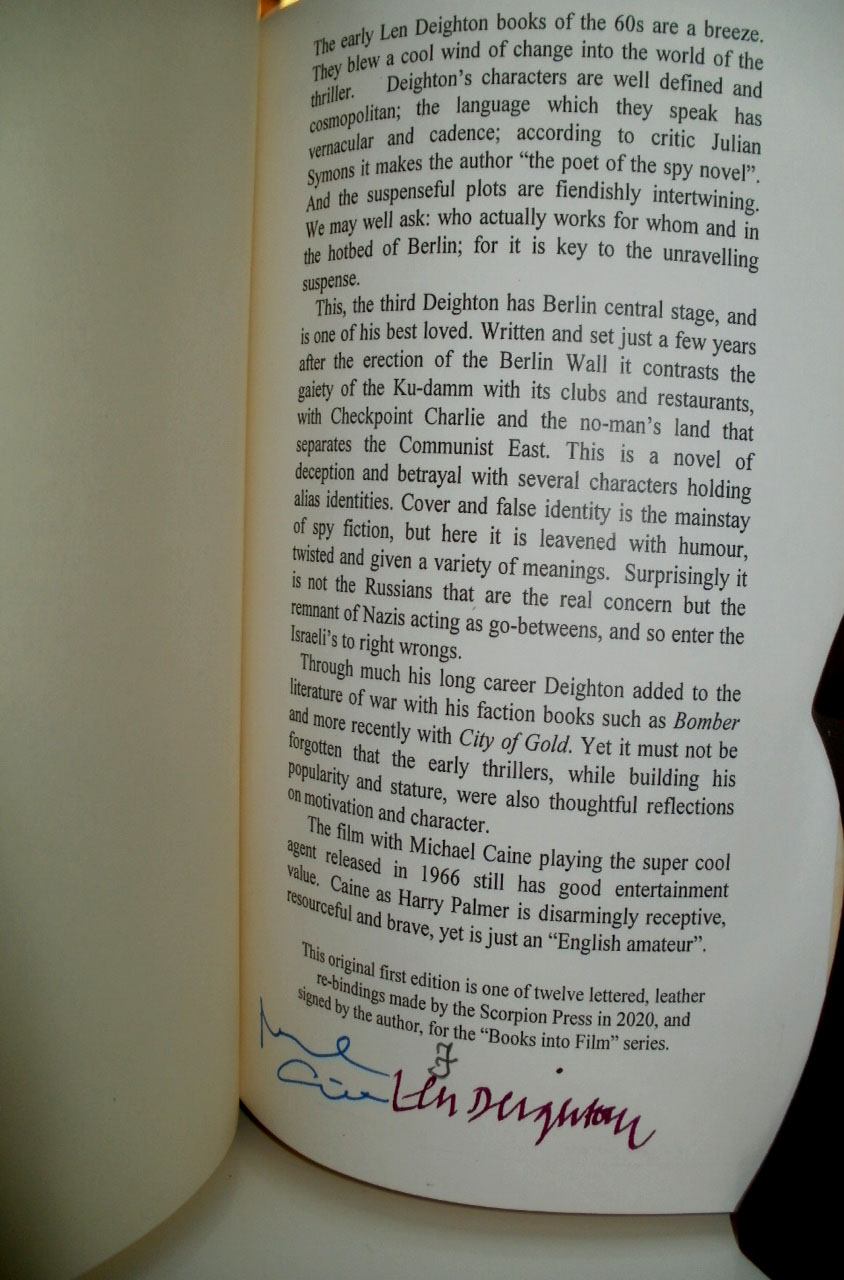
DEIGHTON, Len. FUNERAL IN BERLIN. First edition rebinding. An iconic spy fiction novel and film. Issued in 2020 under the “Books into Film” series. It has the signatures of Deighton and Sir Michael Caine – Harry Palmer, the super cool spy. Twelve lettered copies produced plus the author and Palmer’s secret copies. All taken by subscribers.
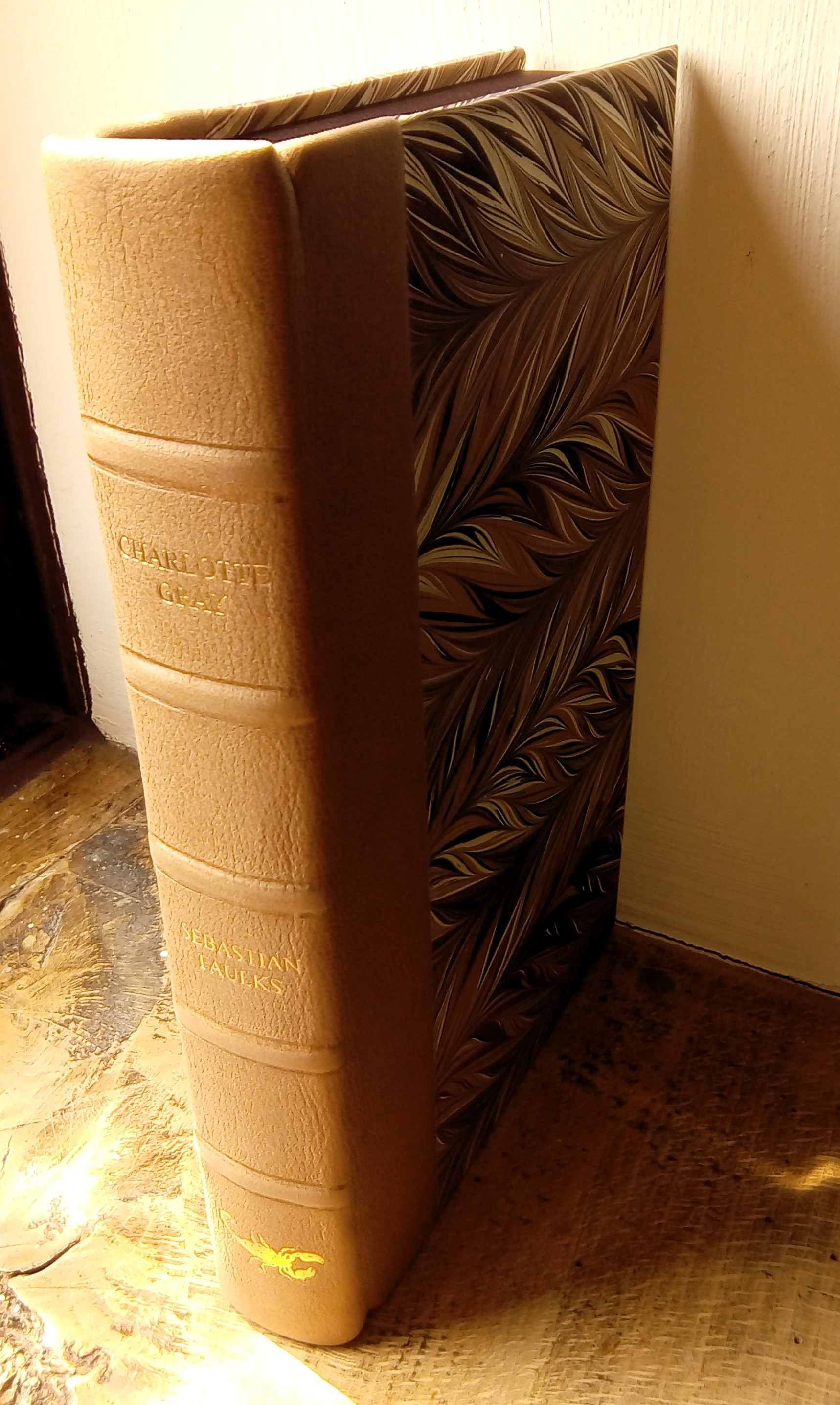 FAULKS, Sebastian CHARLOTTE GRAY first edition rebinding and issued to
 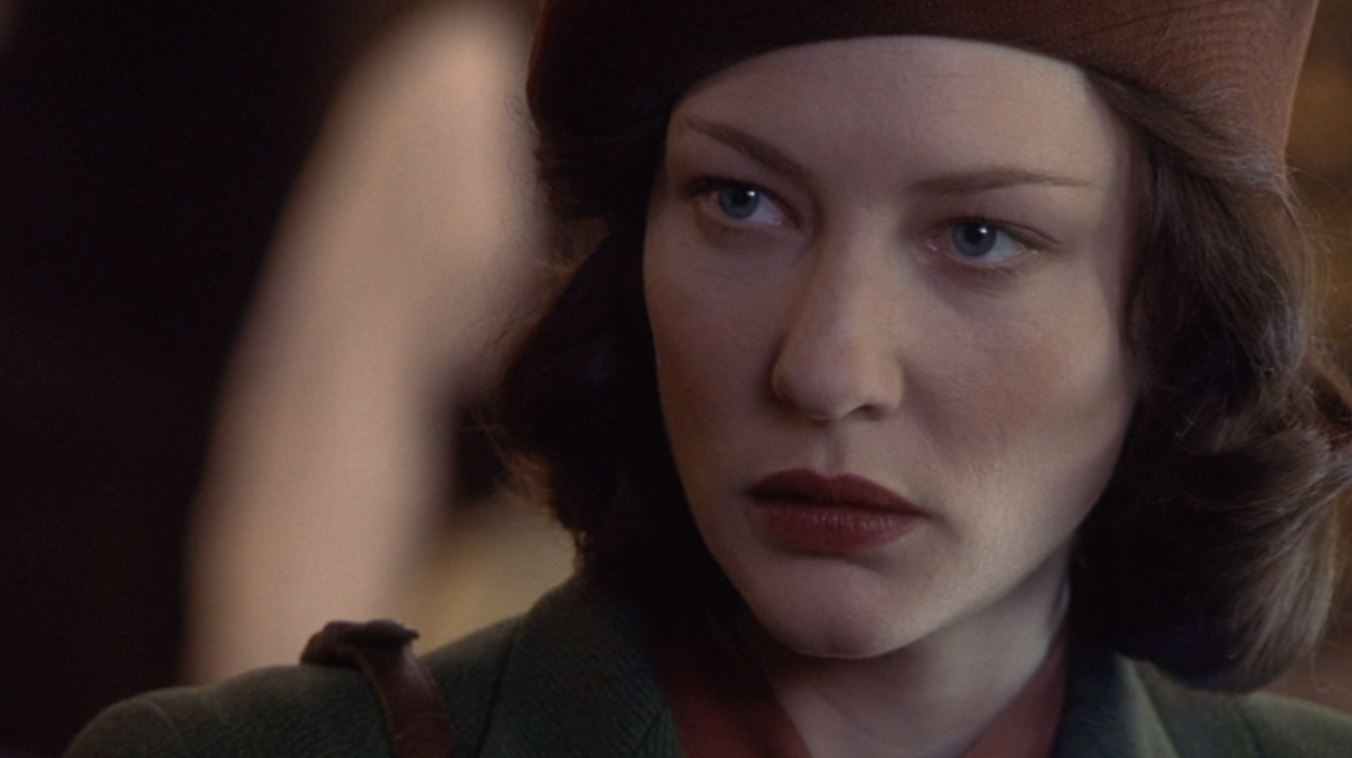 subscribers in 2020, being 1/12 lettered copies in a deluxe leather binding. This book was selected because it dramatically portrays with emotional depth what was like for a woman SOE operative, Charlotte Gray to be parachuted into Vichy France during the war. Partly a love story, it opens up many questions the strain of living under Nazi occupation. The book contains a tribute essay approved by the author and discussion of the 2001 film starring Michael Gambon as the artist Auguste Levade, perhaps a symbolic character of the good in us and Cate Blanchett leads the cast: giving a compelling and radiant performance as both Charlotte and Dominique. Issued with a photograph of Blanchett playing Dominique. All taken.
HARTLAND, Michael /appreciation’s by Homberger Eric & Allbeury Ted, YEAR OF THE SCORPION 1991 1/75 # The author was ‘in the business’ serving in many posts for the secret services. He was recruited at Cambridge and learnt cryptography at GDHQ; transferred to the Home Office in Anti-Terrorism; then went to the Foreign Desk and became a diplomat working on international security involving the prevention of the proliferation of nuclear weapons. Hartland has been compared to Le Carre because of the detailed spycraft, but they are more in the adventure tradition. This novel concerns the rise of China as a global power and is set in the future. This books has an appreciation by Ted Alllbeury and Eric Homberger, an academic author on espionage places Hartland in the spy writing tradition. 1/75 signed limited $90; deluxe lettered 1/15 with raised bands and also signed by Allbeury and Homberger – please enquire.
HIGGINS, Jack./ apprec. by Deighton, Len, DARK JUSTICE 2004 1/85 # Len Deighton says in his tribute that Jack Higgins studied history and taught it. Jack is famous for his wartime adventure stories – particularly The Eagle Has Landed (1976) and for his plots about the Third Reich and the Cold War. Later he concentrated on the Sean Dillon series of undercover agents in the spy world. This is one of those with the action in Washington and New York. 1/85 signed and numbered at the reduced price of $117; deluxe lettered 1/15 with raised bands and also signed by Deighton. Please enquire.
 LAWTON, John. OLD FLAMES Rebinding 1/12 with raised bands. First edition 1996. Dense, full-on thoughtful espionage with a Post-War 50’s background, this is the second Lawton novel concerning the real-life Buster Crabbe diver incident from 1956. Lawton made his mane with Detective Inspector Troy novels with take the detective into the world of real spies.
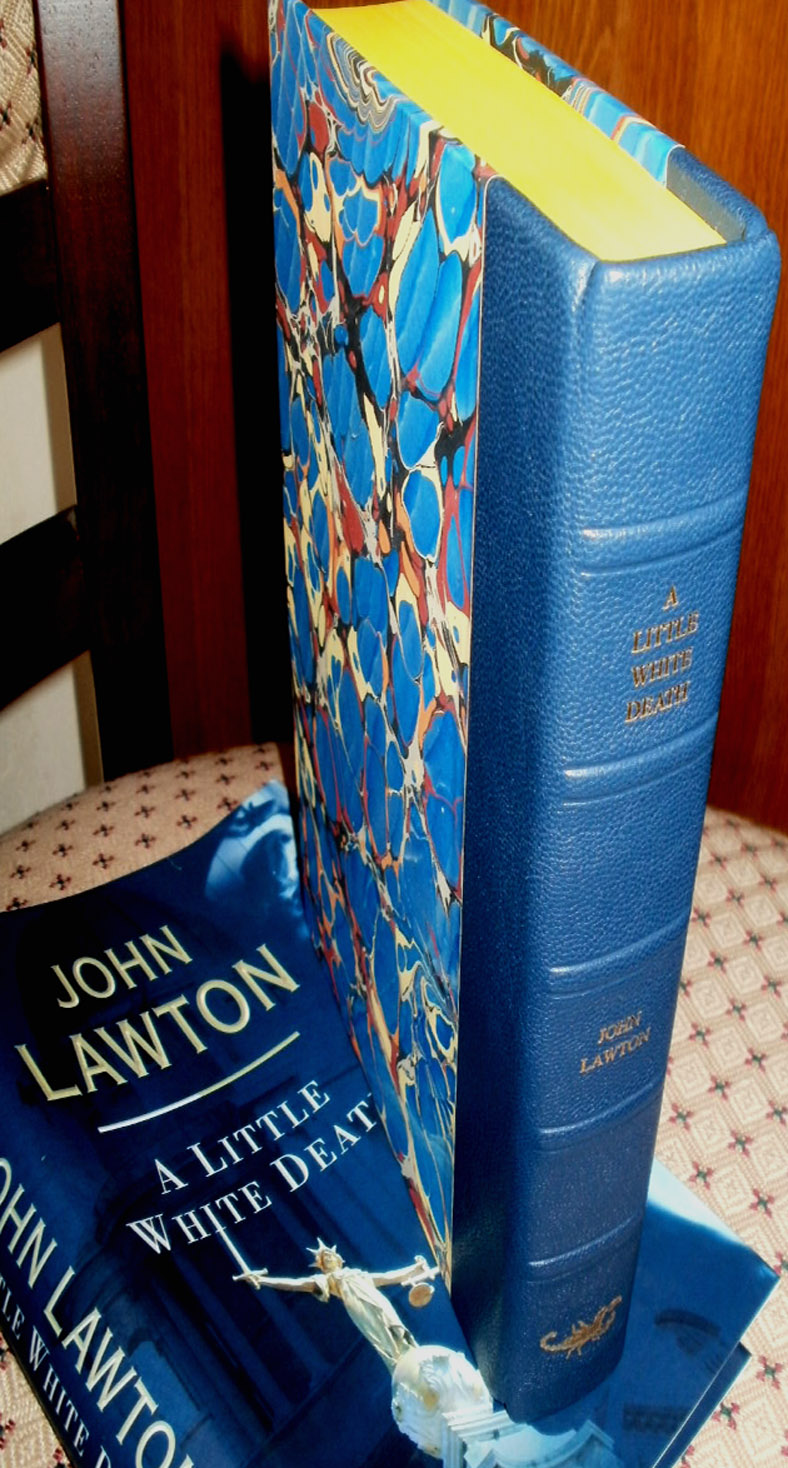
LAWTON, John. A LITTLE WHITE DEATH Rebinding 1/12 with raised bands. First edition 1998. Dense, full-on thoughtful espionage with a Post-War 50’s background, this is the third Lawton novel concerning the real-life Profumo Affair with Christine Keeler and Mandy Rice Davis. Perhaps the most famous sex scandal. But what really happened? This is 1963 and the Swinging Sixties. Available – enquire.
WILSON, Robert. A SMALL DEATH IN LISBON Rebinding 1/12 with raised bands. First edition 1999. Reminiscent of the early Greene and Ambler thrillers, whose main character was a lone Englishman either travelling or based overseas Wilson has a body of work that combines intelligent plotting, sharp language, taut character and place descriptions, a feel for the hazards that life may throw at human relationships, as well as insights into the dark side of political events and big business plus his trademark grasp of national identities and other ways of life with Spain and Portugal featuring prominently. A Small Death in Lisbon was awarded the CWA Gold Dagger.
The grand scale of the past rolling into the present in A Small Death is achieved with two seemingly unconnected plot-lines becoming entwined. One is the German SS scheme to extract a mineral from Portuguese mines for war production; the second is the case of a modern-day murder of a schoolgirl. Both plots have memorable characters German ‘fixer’ and go-between Klaus Felsen and detectives Zé Coelho and Carlos Pinto his partner. The first plot unfolds over several time periods in which loyalty and trust are undermined through discrete scheming. The crimes are nasty and unforgivable, yet the ongoing cover-up over generations – is shown to be a cruel injustice. Can countries which have rightist dictatorial regimes ever be accountable? ‘… history is not what you read in books. It’s a personal thing, and people are vengeful creatures, which is why history will never teach us anything.’ Dr Aquilino Oliveira (from the novel).
]]> To mark 50th years since the original publication of John Fowles’ The French Lieutenant’s Woman (1969) this is a rebinding run of 12 lettered copies with additional material and the facsimile autographs of Fowles and actress Meryl Streep. These books are first editions, first impressions and are therefore scarce.
Deluxe leather binding with five raised bands, marbled patterned sides and coloured top edge. Issued with a photograph of Streep as Sarah Woodruff.
The French Lieutenant’s Woman (1969), John Fowles fourth novel, is widely regarded by collectors of modern first editions as a popular choice for one of the late twentieth century’s outstanding novels. Readers become immersed in the literary references, the historical period and detail, and are drawn to the triangular relationship between Sarah Woodruff, the femme fatale and image of a Pre-Raphaelite model, Charles Smithson the hero, and Ernestina the other woman. The literary establishment loved the book too for its intellectual brilliance: Fowles brought a modernist conjurer’s trick to his construction: producing inside the historical romance a self-conscious fabrication; where the author is in control of the literary form, reshaping its foundations.
The Victorian novel with its didactic message had, following the near collapse of the social and moral order with global events such as the Great War, the Depression and the rise of the Dictators, to adapt and adjust. Writers such as Virginia Woolf and D H Lawrence focussed on inner feelings, passion and liberal values, showing possibilities for a more open self-understanding of who we are and the changed world around us. Few modern authors have succeeded in placing a novel squarely in the period when Dickens and Hardy were the major writers – quite deliberately to investigate literary conventions, and how they worked on the socio-psychological makeup of the characters. John Fowles worked like an artist to portray an era with its conventions being eroded on all sides. We find the gentry in terminal decline, the convention, custom and tradition they stand for eroded. This shift is expressed in the novel as ambivalence about social class, morality, progress, science, religion, and of course, sex. Certainly, the problem for both the hero and heroine is how to cope with the violent passion that their society would not recognise and which its ethos could not contain.
Thought to be un-filmable it was brought to big screen twelve years after the book appeared by Karel Reisz and playwright Harold Pinter in 1981. Music by composer Carl Davis complemented the understated but energised acting of Meryl Streep and Jeremy Irons in the lead parts. It remains a favourite as both outstanding novel and film.
Ready in February 2020.
]]>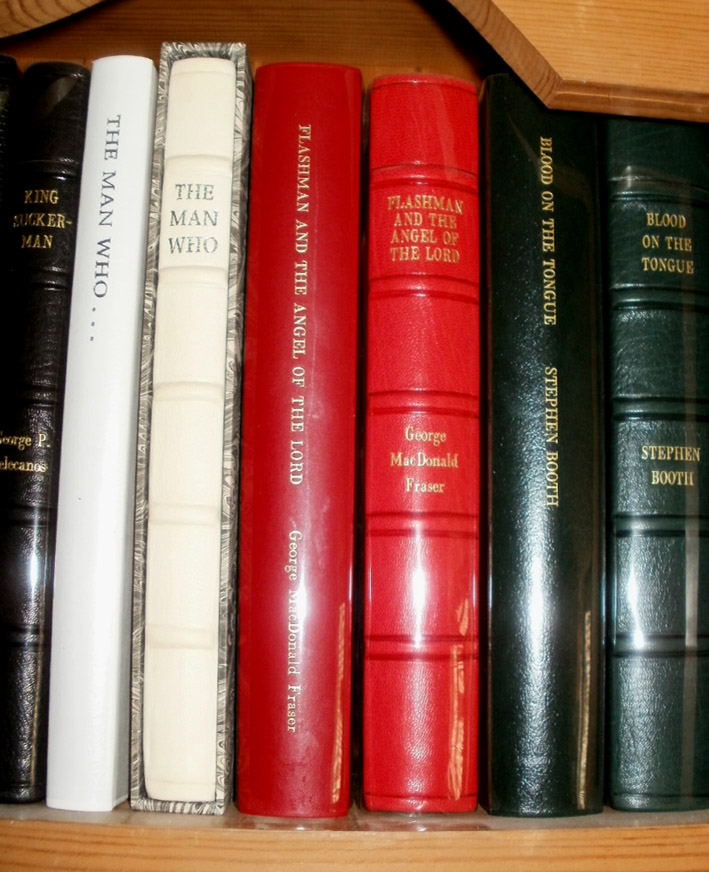 George Macdonald Fraser created one of the great English fictional characters with Flashy or Harry Flashman. This is the original first edition issued by Barrie & Jenkins entitled Flashman’s First Omnibus (1979). Forty years on Scorpion Press is producing a leather bound rebinding of the omnibus edition.
The book comprises Flashman, Royal Flash and Flashman for Freedom! These early books are virtually impossible to find in fine condition. The Omnibus edition was issued with better quality paper – it therefore makes it a better choice for rebinding.
Our previous Flashmans were Flashman and the Angel of the Lord (1994) Flashman on the March (2005). These sold very well indeed.
The new book will have a maroon leather spine with five raised bands, green top edge and marbled sides over boards. It will have an author profile page (which we have sent to friends such as Peter Lovesey to check) and it will have the author facsimile autograph. Twelve lettered copies are being produced for later this year. The expected price is $300.
Contact us to make a reservation.
]]>